








Property Investment • Sep 3, 2025
Property Investment •

Christian Stevens, Mortgage Broker
Published January 31, 2025, 2:10 p.m ET
Share:

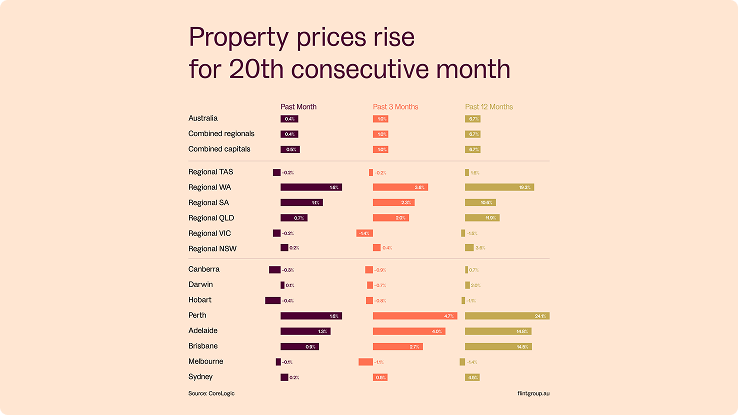
20th Consecutive Month of Growth
The FHOG is a government initiative introduced to offset the cost of purchasing or building a new residential property. It supports first-time buyers looking to enter the property market, particularly for newly built homes, off-the-plan purchases, or substantial renovations.
Over the three months to September, the national median property price increased by just 1.0%. This is the smallest quarterly rise since March 2023, back when this current cycle of growth was in its early stages.
Supply is Increasing, Slowing Price Growth
One of the key reasons for the slowing market is the rise in housing supply. More homes are being listed, making it harder for vendors to secure quick sales at their desired price points.
CoreLogic data shows that the number of new property listings in September 2024 was 3.2% higher than at the same time last year. This increase in listings has pushed supply 8.8% higher than the five-year average for this time of year.
This influx of new listings means more competition among sellers, which can slow down price growth as buyers have more options. Consequently, homes are sitting on the market for longer periods before being sold.
Auction Clearance Rates and Selling Times Decline
Auction clearance rates—a strong indicator of market demand—have also been trending downward. Across the combined capital cities, clearance rates dropped to the low 60% range in September, which is about 4 percentage points below the decade average.
Similarly, properties sold by private treaty are now taking longer to sell. The median time for a home to be on the market nationally was 32 days in the September quarter, up from 29 days in the June quarter and 27 days in the same period last year.
What Does This Mean for Buyers and Sellers?
For buyers, this slight slowdown in the market could be a positive signal, as increased supply and longer selling times may translate into more negotiating power. For sellers, however, it could mean having to temper expectations regarding how quickly their property will sell and at what price.
The long-term outlook for the market remains uncertain, as it will depend on a variety of factors, including interest rates, the broader economy, and further changes in housing supply.
In summary, while the Australian property market has experienced strong growth over the past 20 months, current indicators suggest the market is starting to cool off. Sellers may face more competition, while buyers could find themselves with more opportunities as supply rises.
Frequently Asked Questions
How long has Australia’s property market been growing?
Australia’s housing market has now recorded 20 consecutive months of property price growth, according to CoreLogic data. In September 2024 alone, the median national property price rose by 0.4%. This ongoing streak highlights the strong demand for housing despite broader economic uncertainties. However, the growth rate is slowing, with just a 1.0% increase over the three months to September — the smallest quarterly rise since March 2023.
Why is property price growth starting to slow down?
Australia’s housing market has now recorded 20 consecutive months of property price growth, according to CoreLogic data. In September 2024 alone, the median national property price rose by 0.4%. This ongoing streak highlights the strong demand for housing despite broader economic uncertainties. However, the growth rate is slowing, with just a 1.0% increase over the three months to September — the smallest quarterly rise since March 2023.
What is happening with auction clearance rates?
Australia’s housing market has now recorded 20 consecutive months of property price growth, according to CoreLogic data. In September 2024 alone, the median national property price rose by 0.4%. This ongoing streak highlights the strong demand for housing despite broader economic uncertainties. However, the growth rate is slowing, with just a 1.0% increase over the three months to September — the smallest quarterly rise since March 2023.
Are homes taking longer to sell?
Australia’s housing market has now recorded 20 consecutive months of property price growth, according to CoreLogic data. In September 2024 alone, the median national property price rose by 0.4%. This ongoing streak highlights the strong demand for housing despite broader economic uncertainties. However, the growth rate is slowing, with just a 1.0% increase over the three months to September — the smallest quarterly rise since March 2023.
What does this mean for buyers and sellers?
Australia’s housing market has now recorded 20 consecutive months of property price growth, according to CoreLogic data. In September 2024 alone, the median national property price rose by 0.4%. This ongoing streak highlights the strong demand for housing despite broader economic uncertainties. However, the growth rate is slowing, with just a 1.0% increase over the three months to September — the smallest quarterly rise since March 2023.
Recommended Articles




Property Investment • Jul 15, 2025
Downsizing with Confidence: Financial Tips for Over-50s
Aug 18, 2025
Property Investment • Aug 18, 2025
Unlocking Financial Potential for Senior Executives: Leverage...
Aug 18, 2025
Property Investment • Sep 3, 2025
The Essential Guide to Deposit Bonds: What Homebuyers and...
Aug 18, 2025
Monthly Newsletter
Subscribe and be the first to know about what’s happening in the market.
Contact Us Today
Learn more about how we can help you achieve your financial goals.
Don’t worry, there’s no commitment. Strategic guidance guaranteed.